

Previously, Alisa Hamilton, our communications assistant in Dakar, Senegal, shared with you two photo essays: one on a Tostan blood drive and the other on a Tostan retirement ceremony. Both events took place on February 17th, 2012 at the Centre de Capacitation pour le Developpement Durable (CCDD) in Thiès, Senegal. Below is video Alisa made of that day:
Showing posts with label volunteers. Show all posts
Showing posts with label volunteers. Show all posts
Tuesday, March 27, 2012

Friday, March 23, 2012
Tostan Celebrates a Collective Fifty Years of Hard Work by Valued Tostan Retirees
Story by Alisa Hamilton, Tostan Communications Assistant, Dakar, Senegal
Earlier this year, Tostan celebrated its first retirement ceremony in Thiès, Senegal at the Training Center for Sustainable Development (Centre de Capacitation pour le Developpement Durable, CCDD). Four retirees received certificates and gifts from jovial and grateful members of the Tostan family.
The retirees represented two major regions of Senegal and included Abdoulaye Kandé, Regional Coordinator of Kolda from 1991 to 2011, Babacar Faye, Assistant at Tostan Thiès from 2003 to 2011, Alexadre Mané, Logistics Department Assistant at Tostan Thiès from 2001 to 2011, and Kaw Idy Sow, Security Guard at Tostan Thiès from 1995 to 2011. Djiby Sow, a driver for Tostan Thiès who retired in 2005, also received a certificate and gifts.
Influential Tostan Social Mobilization Agents Imam Demba Diawara of Keur Simbara, Ouréye Sall of N'gerigne Bambara and Doussou Konaté of Same N'diaye gave speeches on the important work of Tostan staff members. At the end of the ceremony, the attendees gathered for a group photograph and partook in delicious pastries and local juices provided by the CCDD. The celebration, one of many to come, was a great success.
View the pictures from the celebration below:
__________________________________________________________________


View the pictures from the celebration below:
__________________________________________________________________

In Thiès, Senegal, Tostan team members gathered for a special ceremony held in honor of several individuals who recently retired after years of service with Tostan.
**

Kaaw Idy Sow, former guard at the Tostan office in Thiès, receives his certificate with a smile. Mr. Sow, 65, has worked at Tostan since 1991. He explained that Tostan was not a job to him but a family, and the office felt like his home. He thanked God for having been able to work until the age of 65 without any mistakes on the job. When asked what he would do with his newly acquired free time, Mr. Sow explained that he would continue to come to the office to visit his friends.


**

Babacar Faye (center, holding certificate), former Tostan Assistant, accepts his gifts and poses with Tostan Thiès team members.
**

Djiby Sow, a retiree and former driver for Tostan Thiès, gives a speech after receiving an honorary certificate.
**

All participants of the retirement ceremony gather for a Tostan family photo outside the CCDD.
Friday, March 2, 2012
Tostan Hosts a Much-Needed Blood Drive in Thiès, Senegal
Story by Alisa Hamilton, Tostan Communications Assistant, Dakar, Senegal
In Senegal, only .25% of the population regularly donates blood compared to the average 2% of donors in other countries. As a result, the National Blood Drive Center in Senegal consistently experiences blood supply shortages, therefore limiting the number of essential blood transfusions that can be performed. Blood banks, like the one in Thiès, Senegal, rely primarily on word of mouth to mobilize potential donors in the community.
On Friday, February 17, Tostan team members rallied their social networks and hosted a blood drive at Tostan’s Training Center for Sustainable Development (Centre de Capacitation pour le Developpement Durable, CCDD) in Thiès, Senegal. On that day, 50 community members and Tostan employees made the decision to help save lives by donating their blood.
Check out pictures from the blood drive below:
__________________________________________________________________


In Senegal, only .25% of the population regularly donates blood compared to the average 2% of donors in other countries. As a result, the National Blood Drive Center in Senegal consistently experiences blood supply shortages, therefore limiting the number of essential blood transfusions that can be performed. Blood banks, like the one in Thiès, Senegal, rely primarily on word of mouth to mobilize potential donors in the community.
On Friday, February 17, Tostan team members rallied their social networks and hosted a blood drive at Tostan’s Training Center for Sustainable Development (Centre de Capacitation pour le Developpement Durable, CCDD) in Thiès, Senegal. On that day, 50 community members and Tostan employees made the decision to help save lives by donating their blood.
Check out pictures from the blood drive below:
__________________________________________________________________
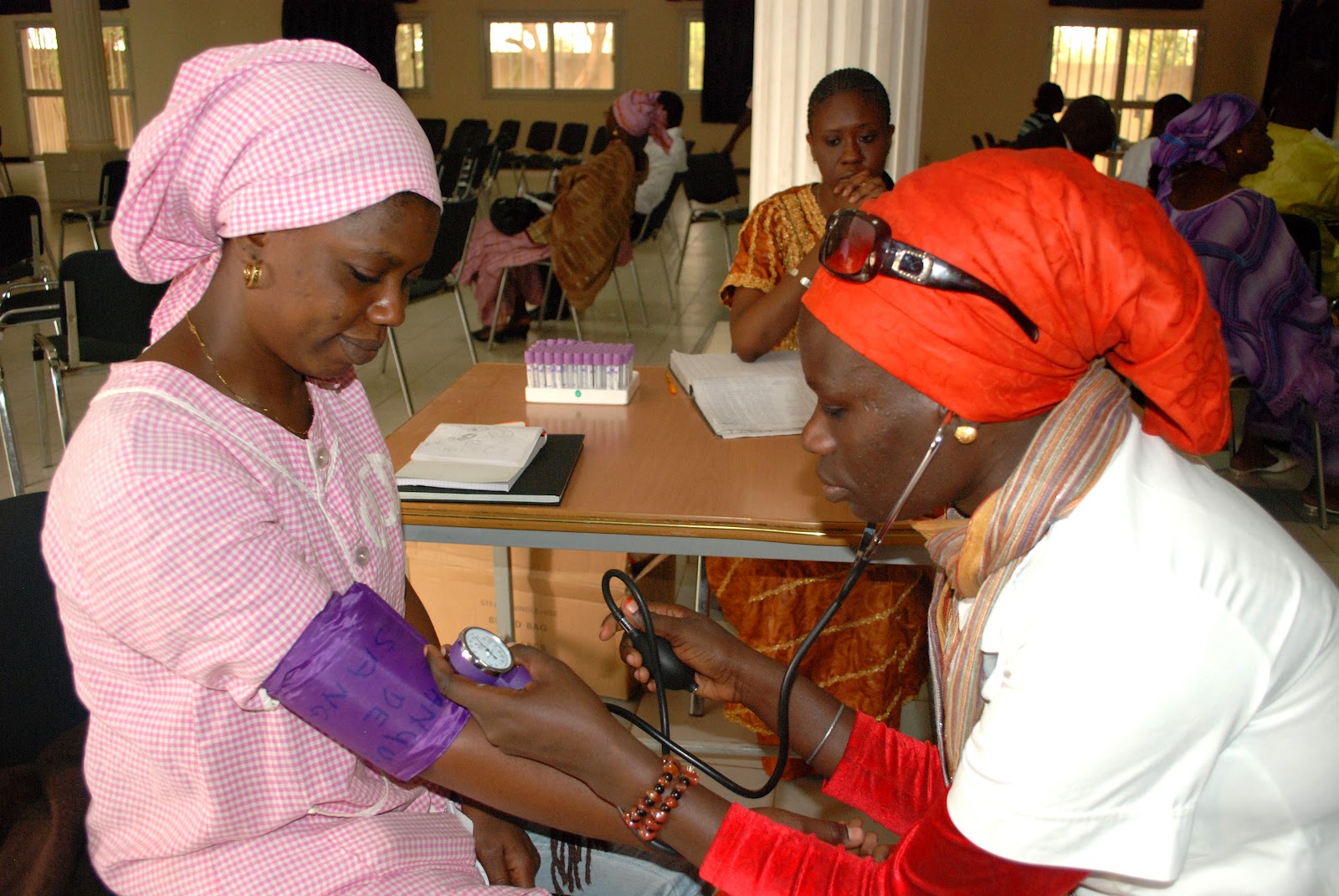
Aminata Saho, a Tostan team member at the CCDD, has her blood pressure taken. She and her friend and colleague, Ndiaye Aminata Puit, learned about the blood drive that day and both decided to donate for the first time.
**

Ardo Fall, Director of the CCDD, watches as his donation bag fills. He has given blood for four years and often travels to the hospital to give for emergency cases. When asked why he gives blood, Ardo responded, “Because it saves lives. It’s something that I respect because some day, it might be me who needs it.”
**

Smiling, Aminata stays calm during her first blood donation. She shared that she wanted to donate because giving blood can help people who are sick, such as her mother who recently received a blood transfusion.
**

Khady Diato Sall, the donation organizer at the blood bank in Thiès, Senegal has given blood over 50 times. “[Donating blood] is a civic act,” Khady explained. “Many people don’t do it because they are afraid or they think it won’t help. But every day the hospital calls us for donations. It saves lives.”
**

Ousamane Cisso used to be afraid to give blood, but has since overcome his fear and encouraged many of his friends to donate as well. His mother works for the blood bank, and Ousamane and many of his relatives came to the CCDD to donate on the day of the blood drive.

**

Mohamed Sall (far left), Ousamane Cisso’s cousin, came to give blood for the first time. He used to be afraid of needles, but Ousamane encouraged him to overcome his fear. “I know the hospitals suffer from a lack of blood. I wanted to help people because it can save a life,” explained Mohamed. Here he poses with his friends.
**

The Cisso family after giving blood. From left to right: Ismael Cisso, Allasane Cisso, Mamie Cisso, Aliou Cisso, Boubacar Cisso.
**

Ndiaye Aminata Puit (right) poses with her friend, Sorde, after donating for the first time.
**

Khady Guèye (left), Treasurer of the Federation of Community Management Committees (CMC) in the region of Thiès, and Khady Mbaye Ka (right), President of the Thiès CMC Federationalso gave blood for the first time. Khady Mbaye explained, “Giving blood is a noble act. A way to manufacture blood has not yet been invented so we will always need donations.” She continued that many women, including one of her sisters, need blood transfusions during childbirth due to haemorrhaging.
Wednesday, November 23, 2011
Tostan DC Internship Program Offers Unique, Substantial Experience in International Development
With over 99% of Tostan staff working in Africa, the Washington, DC team accomplishes much with a small presence. Because of this, interns in the DC office take on an immediate and important role; they are an integral part of our office, working to assist in our Development, Communications, and Operations Teams.
Speaking to her experience, current Communications Assistant Hannah Kramer said: “Daily check-in meetings and joint projects create opportunities for interns to work in collaboration with other staff and teams. I have never felt more valued in an internship.”
If you would like to learn more about the Washington, DC Internship Program, click here. Ready to apply? Access the application here.
Please note: The application deadline for Spring 2012 is December 1.
Thinking of volunteering for Tostan in the field? Tostan Volunteers work in five countries. Visit the Africa Volunteer Program page for more information.
Friday, November 4, 2011
Former Tostan volunteer Sydney Skov shares her Tostan story on Stirring the Fire
Stirring the Fire, an organization focused on raising awareness about gender equality, connects individuals seeking internship, volunteer, study abroad, and political advocacy opportunities with international organizations involved in promoting human rights and gender empowerment.
Stirring the Fire’s Volunteer Insights series highlights individual volunteers from various organizations and their stories. One of their most recent Volunteer Insights videos features Sydney Skov, Tostan’s Communications Assistant in Dakar, Senegal from January 2010-11. During her time with Tostan, Sydney was involved in various communications projects, including developing social media platforms and website resources for Tostan’s Anglophone and Francophone audiences. In the video, Sydney speaks to her experience as a Tostan volunteer, and describes how witnessing grassroots initiatives and women’s empowerment personalized the connection she saw between gender issues and development.
To view this Volunteer Insights video featuring Sydney Skov, please click the image below.
Volunteer Insights - Tostan from Phil Borges on Vimeo.
In addition, Stirring the Fire also interviewed Gannon Gillespie about his experiences as a Tostan volunteer in Senegal in 2004 and his current role as Tostan’s Director of Strategic Development. To watch Gannon Gillespie featured in an exclusive video interview, click here.
If you are interested in learning more about Tostan's volunteer and internship opportunities and application process, please click here.
Stirring the Fire’s Volunteer Insights series highlights individual volunteers from various organizations and their stories. One of their most recent Volunteer Insights videos features Sydney Skov, Tostan’s Communications Assistant in Dakar, Senegal from January 2010-11. During her time with Tostan, Sydney was involved in various communications projects, including developing social media platforms and website resources for Tostan’s Anglophone and Francophone audiences. In the video, Sydney speaks to her experience as a Tostan volunteer, and describes how witnessing grassroots initiatives and women’s empowerment personalized the connection she saw between gender issues and development.
To view this Volunteer Insights video featuring Sydney Skov, please click the image below.
Volunteer Insights - Tostan from Phil Borges on Vimeo.
In addition, Stirring the Fire also interviewed Gannon Gillespie about his experiences as a Tostan volunteer in Senegal in 2004 and his current role as Tostan’s Director of Strategic Development. To watch Gannon Gillespie featured in an exclusive video interview, click here.
If you are interested in learning more about Tostan's volunteer and internship opportunities and application process, please click here.
Monday, May 9, 2011
VOICES OF TOSTAN: Jonah Meyers
Interview with a Regional Volunteer
 Jonah Meyers is Tostan’s regional volunteer in the Fouta region, Senegal. He recently chatted with communications assistant, Will Schomburg, about his experiences at the half way point of his service.
WS: What drew you to Tostan specifically?
WS: What are your views on what Tostan does?
 JM: I think Tostan does really important work here in Senegal and in the other countries the NGO has worked in. Whenever I go to a village the community thanks Tostan for all the changes that have happened, from women being more comfortable speaking in public to a water tower being funded by the village and the government. It's important to say though, as well, that Tostan's work wouldn't be possible without the dynamic and motivated leaders it works with in the communities.
JM: I'm the Regional Volunteer in the Fouta coordination. That means I assist
the Regional Coordinator and the staff with a lot of different things. Generally, I have a lot of administrative responsibilities like writing reports and going on village tours in order to supply donors with good village portraits. I also help organize staff events, visits by donors and partners, attend some of our events in the region, work on the website, teach IT skills, and many other things. An initiative of my own I'm working on at the moment is starting a partnership with Peace Corps volunteers from the regions that we work in.
WS: What have you enjoyed the most so far?
JM: Hands down, sitting around with the people. Even if I don't understand much Pulaar, I like to sit around and learn, drink sweet tea and eat grilled corn on the cob. The people here are amazingly nice; Senegal is the country of hospitality, or terranga as it is locally called.
WS: Can you mention one interesting thing you've experienced since arriving?
JM: I usually find myself laughing at situations I'm in because I would have never imagined something happening. But one funny thing that happened was when I had to chase goats out of our office while I was on Skype with my brother.
WS: What has been your biggest challenge?
JM: My biggest challenge has been balancing my own desires with those of the people surrounding me. In Senegalese culture it's often rude to refuse an invitation, especially when it comes to eating. I've gotten frustrated when people expected me to eat with them and then gotten mad when I didn't show up for dinner, for example. After making a couple mistakes I tried to please everybody, which meant I also wasn't always doing what I wanted to do. It's important to find a balance between being friendly and fitting in here and also making yourself comfortable and happy, which I think I'm finally getting the hang of after a few months.
WS: What would you say to people thinking about applying to Tostan or more generally considering development work in Africa?
 JM: Africa may not be rich in dollars, shiny cars and nice apartments, but it is rich in warmth and friendship. Take advantage of your situation to get to know the people around you. It will not only give you a better understanding of your work, but will also help the local community to understand (and hopefully appreciate) your efforts if not your results, as well.
WS: What will you miss most about Senegal? What do you miss most about the US?
JM: Due to the weather and the social status here, the lifestyle is completely different. I like sleeping on my roof, and walking to get good bread in the mornings, both of which are more difficult to do in the States. What I miss most about home, besides friends and family, is food. Things like cheese, granola, pizza, and generally just a wide variety of food options that doesn't exist here.
WS: What do you think has been the most important thing you have learnt in Senegal?
JM: Senegal has made me a lot calmer. In the U.S. I get antsy sitting around for more than a half an hour. Here I can literally sit in the same place and not get up for six hours. I've done it, provided there's a big bowl of food to share and some tea to follow. Besides that, living in Africa is just such a humbling experience. Meeting the kindest people who don't have electricity gets you thinking about why people in my hometown get upset about the smallest things and how unreasonable we can be when we have so much more.
WS: What do you hope to do next?
JM: In life? Well I need to finish school and then I'll see what happens. Maybe I'll be back in Senegal at some point to an international development job. Or I might just go climb rocks for a bit, we'll see.
WS: What do you hope to have achieved at the end of your service here?
JM: I don't want to think about my stay here as results-oriented. I do want to leave happy with my service, feeling like I've developed personally and professionally and contributed to Tostan's work here.
 Jonah Meyers is Tostan’s regional volunteer in the Fouta region, Senegal. He recently chatted with communications assistant, Will Schomburg, about his experiences at the half way point of his service.
 Will Schomburg: Could you tell our readers a bit about what you were doing before you came to Africa?
Jonah Meyers: I'm originally from Columbia, Maryland and now an undergraduate at the University of Maryland, College Park. I study anthropology, international development, and French. I lived in France for a year after high school, and wanted to continue my French language skills in a development context in West Africa. Other than school stuff, I spend a lot of time in the outdoors; I like to mountain bike, rock climb, etc.
WS: What drew you to Tostan specifically?
JM: What drew me to Tostan was a combination of being impressed with their work and the opportunity to volunteer with them over a long period. It's difficult to find an international development internship with little experience without having to pay somebody, so Tostan was the perfect fit. Not only do they have an awesome volunteer program, their approach in the field is pretty unique in its grassroots approach and has really been a catalyst for change in Senegal for health, education, and so many other issues.
WS: What are your views on what Tostan does?
 JM: I think Tostan does really important work here in Senegal and in the other countries the NGO has worked in. Whenever I go to a village the community thanks Tostan for all the changes that have happened, from women being more comfortable speaking in public to a water tower being funded by the village and the government. It's important to say though, as well, that Tostan's work wouldn't be possible without the dynamic and motivated leaders it works with in the communities.
WS: What do you think makes Tostan different?
JM: What makes Tostan different is its effort to create a truly holistic program. With a director who has lived in Senegal for over 30 years and a staff over 99% African, the program is tailored to the local cultures and centers on important collaboration. The staff knows that development needs to address every possible issue in the community. For example, without health a community cannot prosper economically or continue to educate itself, and without respecting human rights a population cannot be truly healthy. Tostan has really figured it out over the past 20 years and I reckon gotten it right.
WS: Can you describe your role?
JM: I'm the Regional Volunteer in the Fouta coordination. That means I assist
the Regional Coordinator and the staff with a lot of different things. Generally, I have a lot of administrative responsibilities like writing reports and going on village tours in order to supply donors with good village portraits. I also help organize staff events, visits by donors and partners, attend some of our events in the region, work on the website, teach IT skills, and many other things. An initiative of my own I'm working on at the moment is starting a partnership with Peace Corps volunteers from the regions that we work in.
WS: What have you enjoyed the most so far?
JM: Hands down, sitting around with the people. Even if I don't understand much Pulaar, I like to sit around and learn, drink sweet tea and eat grilled corn on the cob. The people here are amazingly nice; Senegal is the country of hospitality, or terranga as it is locally called.
WS: Can you mention one interesting thing you've experienced since arriving?
JM: I usually find myself laughing at situations I'm in because I would have never imagined something happening. But one funny thing that happened was when I had to chase goats out of our office while I was on Skype with my brother.
WS: What has been your biggest challenge?
JM: My biggest challenge has been balancing my own desires with those of the people surrounding me. In Senegalese culture it's often rude to refuse an invitation, especially when it comes to eating. I've gotten frustrated when people expected me to eat with them and then gotten mad when I didn't show up for dinner, for example. After making a couple mistakes I tried to please everybody, which meant I also wasn't always doing what I wanted to do. It's important to find a balance between being friendly and fitting in here and also making yourself comfortable and happy, which I think I'm finally getting the hang of after a few months.
WS: What would you say to people thinking about applying to Tostan or more generally considering development work in Africa?
 JM: Africa may not be rich in dollars, shiny cars and nice apartments, but it is rich in warmth and friendship. Take advantage of your situation to get to know the people around you. It will not only give you a better understanding of your work, but will also help the local community to understand (and hopefully appreciate) your efforts if not your results, as well.
WS: What will you miss most about Senegal? What do you miss most about the US?
JM: Due to the weather and the social status here, the lifestyle is completely different. I like sleeping on my roof, and walking to get good bread in the mornings, both of which are more difficult to do in the States. What I miss most about home, besides friends and family, is food. Things like cheese, granola, pizza, and generally just a wide variety of food options that doesn't exist here.
WS: What do you think has been the most important thing you have learnt in Senegal?
JM: Senegal has made me a lot calmer. In the U.S. I get antsy sitting around for more than a half an hour. Here I can literally sit in the same place and not get up for six hours. I've done it, provided there's a big bowl of food to share and some tea to follow. Besides that, living in Africa is just such a humbling experience. Meeting the kindest people who don't have electricity gets you thinking about why people in my hometown get upset about the smallest things and how unreasonable we can be when we have so much more.
WS: What do you hope to do next?
JM: In life? Well I need to finish school and then I'll see what happens. Maybe I'll be back in Senegal at some point to an international development job. Or I might just go climb rocks for a bit, we'll see.
WS: What do you hope to have achieved at the end of your service here?
JM: I don't want to think about my stay here as results-oriented. I do want to leave happy with my service, feeling like I've developed personally and professionally and contributed to Tostan's work here.
Wednesday, January 5, 2011
After a Year of Volunteering, The Assistant to the International Communications Team Bids Farewell to her Tostan Family
Story by Sydney Skov, Tostan Volunteer in Dakar, Senegal

Enter a little bit of luck and a good Google search. Tostan. The volunteer positions were exactly what I had been looking for: based in Senegal, lasting six months to a year, and focused on professional work with an NGO working to promote causes I believe in: human rights and education. I booked my flight.
I arrived at 6 am. As I began to sweat I thought how strange it was that I’d been standing in snow only hours before. The beads on my forehead were a subtle yet effective display of my new arrival status; men at the airport were wearing parkas, cold in the balmy January winter. The sun rose over the sandy roads and the raw brick buildings; after a quick taxi ride, I was home. I threw my jeans in the back of the closet in the Tostan volunteer house, donned a floor length skirt instead, and greeted a girl in red-striped p-js with blond hair and tired eyelids who was just getting up: my roommate for the next seven months. Exhausted from a month-long monitoring mission to The Gambia, Katie said nothing but, “Do you want to go to church?” Her invitation— to a local Christian church in a predominately Muslim country – sparked my curiosity. As the call to prayer sounded from the neighborhood mosque, I headed downtown to a gospel church. From the windows of the black and yellow taxi I caught my first true glimpses of the fascinating and diverse undercurrents of my new life in Senegal.

I have also been lucky enough to weave myself into this city’s vibrant fabric, to meet and mingle with inspired Dakar dancers who have, for me—a long-time contemporary dancer—re-defined what it means to be an artist.

Monday, November 15, 2010
TRAVELOG- VISITING TOSTAN'S NEW MANDINKA VILLAGES
Story by Katie Seward, Tostan Volunteer in The Gambia
As we ride the 30 kilometers from Kuraw Kemo to the next village of Touba Wuli, my fear of motorbikes begins to give way to exhilaration. I feign nonchalance by resting one hand on my knee in an attempt to look casual, while still tightly gripping the tail light behind me with the other.
Day 2
TOUBA WULI

In the village of Touba Wuli, education is on the tip of everyone’s tongue when I ask about challenges facing the community. There is no English school here, only a Koranic one, and even that has no desks, no chairs, and just one blackboard for over 100 students. Nearly all adults in the community are illiterate but they have greater hopes for their children, many of whom attend English schools in neighboring villages.
 Unlike many Gambian villages, there is no skills center in Touba Wuli where residents can learn marketable trades. Ajafay Camara, the head of the women’s kafo (committee), attends meetings in Basse as part of her duties and on one such occasion, she received a brief training in fabric dyeing. Though she wants to teach this to the women of the community, there is no money to hire a more qualified instructor or even to purchase the necessary supplies.
On the subject of female genital cutting (FGC), Karmo Sanuwo, the secretary for the Village Development Committee (VDC) expresses his support for the practice on the basis of religion, tradition, and the necessity for “cleanliness.” But Ms. Camara told me previously that she attended the Tostan declaration in the nearby village of Darsilame. When I turn to ask her opinion she sighs and says, “It is very difficult to stop this tradition, but if people are educated about the problems, if they are sensitized, they will abandon.”
 Despite never having previously met any of the inhabitants of Touba Wuli, Lakamay and I are graciously fed and lodged that night as guests. We join the community in watching a soccer game until the sun sets. Without electricity, the arrival of night feels more profound, but it is still not as dark as one would expect as we sit outside for hours. The village is illuminated by the Milky Way, the flickering of candles, the flashing of a lightning storm on the horizon, and the glow of the coals used to brew attaya or green tea.
Photos by Katie Seward: Top- Sunset over Touba Wuli, Middle- fom left to right: Ajafay Camara, head of the women’s kafo; Ibrahim Jawo; and Karmo Sanuwo, VDC secretary, Bottom- A soccer match in which the juniors beat the seniors 3-1

On the subject of female genital cutting (FGC), Karmo Sanuwo, the secretary for the Village Development Committee (VDC) expresses his support for the practice on the basis of religion, tradition, and the necessity for “cleanliness.” But Ms. Camara told me previously that she attended the Tostan declaration in the nearby village of Darsilame. When I turn to ask her opinion she sighs and says, “It is very difficult to stop this tradition, but if people are educated about the problems, if they are sensitized, they will abandon.”

Photos by Katie Seward: Top- Sunset over Touba Wuli, Middle- fom left to right: Ajafay Camara, head of the women’s kafo; Ibrahim Jawo; and Karmo Sanuwo, VDC secretary, Bottom- A soccer match in which the juniors beat the seniors 3-1
Monday, November 8, 2010
TRAVELOG – VISITING TOSTAN’S NEW MANDINKA VILLAGES
Story by Katie Seward, Tostan Volunteer in The Gambia
It is the rainy season in The Gambia and the river had risen up to seize the streets of Basse, making the nearest blocks almost Venice-like as they are only navigable by boat. Tostan Supervisor Lakamay Gaye and I began our journey. Once we get out of Basse and across the river, we climb onto the motorbike; an anxiety-inducing experience. A barely competent bicycle rider, I have never ridden on a motorcycle before and I am terrified by the bumpy, red dirt roads I know lay before us, but I strap on a helmet and throw my leg over the vinyl seat. The bike sputters and starts and we are off, heading towards the Mandinka villages that will constitute the newest participants in the Tostan Community Empowerment Program (CEP) in The Gambia.
DAY 1
KURAW KEMO

The village of Kuraw Kemo feels empty upon our arrival. The alkako (village chief), the record keeper, the head of the women’s kafo (committee)—they are all out working in the community garden. A small boy leads the way and when we approach the group, I am handed a hoe, to everyone’s amusement. After a few minutes of haphazardly hacking at rice, the village decides it has been sufficiently entertained by the agricultural ineptitude of a toubab (foreigner) and we settle beneath a wolo tree to discuss life in Kuraw Kemo.

This community, so proactive about initiating their own development, has already started to feel the impacts of the Tostan program. The neighboring village of Kuraw Arafeng participated from 2007 to 2009 and has shared the knowledge they acquired about the harmful effects of female genital cutting (FGC). Now the community says they have largely abandoned the practice as they found it difficult to continue once they became aware of the consequences.
Photos by Katie Seward: Top- the streets of Kuraw Kemo. Middle- Hawa Konoba in front of the rice and mango fields and community-gathering wolo tree. Below- Ibrahim Danso (right) and Bacary Malang (left), discuss problems in the village
Tuesday, November 2, 2010
When Europe Meets Africa
Story by Sun-Min Kim, Intern at Tostan France, Paris
 October 6 – I am standing in front of the Satellit Café, a world music bar in the 10th district of Paris, waiting for the rest of the Tostan France team to arrive. I started interning at Tostan France in June, and today, I will have a chance to be part of an off-site event. Volker Goetze, a German friend of the organization, is performing tonight with his Senegalese partner and fellow musician Ablaye Cissoko, and he invited Tostan France to come and present its activities during the break.
Volker plays the trumpet, Ablaye plays the African string instrument the kora, and together they perform jazz music. While I am trying to picture how two such different instruments could fuse into jazz, everybody begins to arrive; that is, the three regular members of the Tostan France office, Sabine, Marine, and Seydou, two volunteers Eric and Makhoudia, two friends of the organization, and Gannon who is visiting us from the Tostan DC office.
Established in Paris in 2007, the Tostan France office was born out of the need to involve members of the African diaspora in the development process in their communities of origin. Through years of experience in Senegal and other African countries, Tostan has learned that members of the diaspora are influential forces that can either hinder or fuel social development. Development in African villages is only sustainable when the diaspora communities are involved in the decision-making process. Tostan France therefore meets the crucial need of maintaining an on-going dialogue between those who have emigrated and those who have not.
Tuesday, September 21, 2010
Volunteer Voice
Participants in Tostan’s Africa Volunteer Program bring unique educational experiences and expertise to their work at Tostan, supporting community-led development across Africa in a number of different capacities. Volunteering is more than just a professional experience─it is a chance to broaden horizons and develop understanding through cultural exchange.
Jennifer Keuler, the Adopt a Village Program Coordinator from September 2009 through September 2010, shares a bit of her experience.

After graduation, I realized that it was really the perfect time to travel and I looked into Tostan. I realized that Tostan’s mission—human rights based, non-formal education—was a great match for my interests and experience. Tostan provided very specific and applied work with quite a bit of responsibility. I saw an opportunity for professional growth and self-directed work as well as an incredible chance to be in the country I love. With a purpose.
The richness of Senegalese culture fascinates me. When I first came, I was impressed at how Senegal, surrounded by many countries in unrest, managed to be so safe and peaceful. I was very interested in how the Muslim brotherhoods interact with other religious groups and the [government] and how they influence society. I am so grateful that Tostan has allowed me to give back in a positive way to the nation that has been so formative in my life.

Volunteering, for me, means giving my time, skills, and love to make the world a happier place. It means making a sacrifice for the betterment of others. Field experience, and the learned skills that result—awareness of the many factors that impede or encourage development, the ability to identify problems and successfully resolve them, the ability to see opportunities for improvement or expansion of programs, working with donors and local partners and so many others—are irreplaceable. For me, the experience was an important step in deciding exactly what kind of development work I’d like to pursue.
Photos by Jennifer Keuler. Top: Jennifer during her time in Senegal. Below: Students outside of the CEP classroom in the village of Thiel Sebe, Senegal
Friday, June 25, 2010
Tostan Welcomes June Volunteers!

Malick Niang (left), Assistant to the Program Department at Tostan, Senegal, and Zoe Williams (standing, left), Tostan’s Volunteer Coordinator with the new volunteers in Thiès.
After an orientation in the city of Thiès, Senegal, involving language lessons and courses on Senegalese culture, Tostan’s new volunteers are heading out to their respective coordinations in the areas of Mbour, Fouta, Thiès, and Dakar, Senegal as well as Kololi, in The Gambia. At Tostan, culture is key, so incoming-volunteers quickly become well-versed in Senegalese greetings, dress, and cuisine while learning deeper lessons about Senegalese life from dedicated Regional Coordinators and Tostan staff. Hailing from all over the United States, this group of volunteers boasts a variety of backgrounds but it is the enthusiasm for grassroots, sustainable development that brings them together at Tostan. Welcome!
To learn more about our volunteer program, visit our website.
To learn more about our volunteer program, visit our website.
Subscribe to:
Posts (Atom)
